Bavarian Taste Heritage

Bavarian Taste Heritage is about real food, made in special places, by local people. At its heart are the EU-protected products which shape Bavaria’s regional food culture. More than 300 traditional specialities are produced across the region, each with deep roots in its local community. Among these, 54 Bavarian specialities enjoy protection under the EU system of geographical indications.
EU protection means clear rules and reliable standards. Each product follows a defined specification and is checked by independent, official controls. This ensures that products carrying a protected name truly come from their stated place of origin and are produced according to the agreed specifications.
The Free State of Bavaria supports this Bavarian Taste Heritage as a strong foundation for regional value, sustainable production and long-term economic stability. These products are not only part of everyday life in Bavaria, they also stand for a food culture that values craft, responsibility and flavour.
Geographical indications contribute to sustainable rural development by supporting regional production systems and preserving traditional knowledge. By linking products to their place of origin and established production practices, they help maintain local value chains and strengthen cooperation among producers within a defined area. This in turn supports economic activity and employment in rural regions, reinforces regional identity, keeping skills, know-how and value creation anchored locally.

From beer, wheat and vegetables to cheese, wine and meat products, Bavarian specialities cover a broad and surprising range. They are closely linked to Bavaria’s gastronomy. Under the “GenussKüche” quality label system, visitors can find authentic Bavarian restaurants where regional products and everyday cooking traditions are lived and served.
The “GenussOrte” (Food Places) highlight places across Bavaria where food culture matters, from villages and landscapes to towns shaped by local specialities.
Recognising EU-protected products at a glance
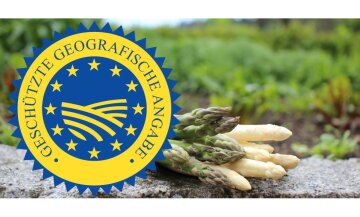
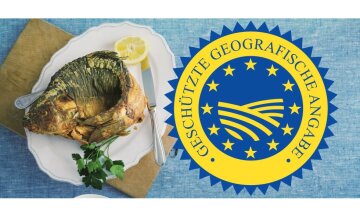
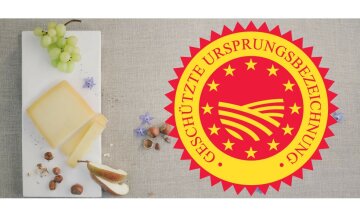
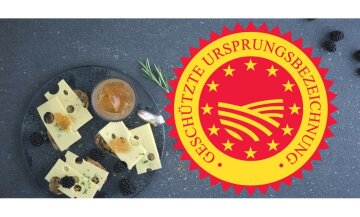
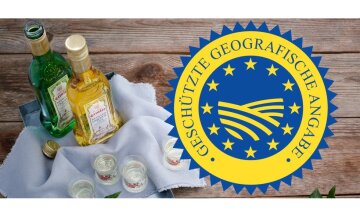
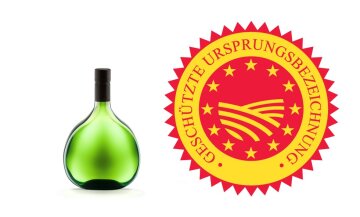
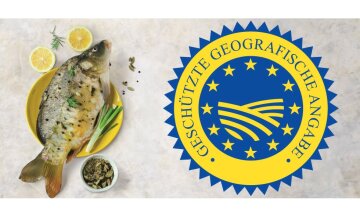
EU-protected products can be easily identified by the official EU quality schemes Protected Designation of Origin (PDO) and Protected Geographical Indication (PGI). They distinguish foods whose quality and character are closely linked to their place of origin. Behind these designations lies a public, officially verified control system.
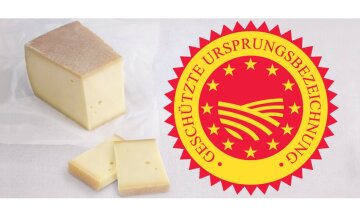
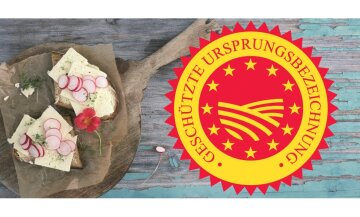
PDO – Protected Designation of Origin

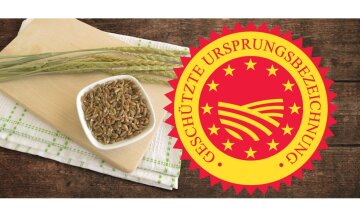
A product with a Protected Designation of Origin (PDO) owes its quality or specific characteristics mainly to its geographical environment, including both natural and human factors.
All stages of production take place within the defined region.
International examples: Champagne, Parmigiano Reggiano, Wachau Apricot
Examples from Bavaria: Allgäuer Bergkäse (Allgäu Mountain Cheese), Fränkischer Grünkern (Franconian Green Spelt), Spalt Spalter (Spalt Hops)
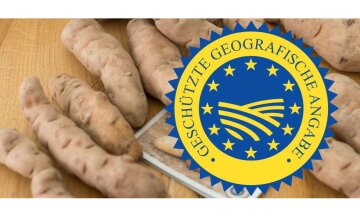
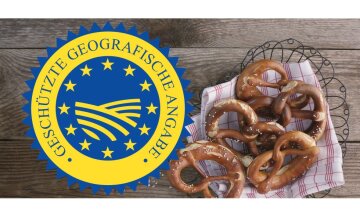
PGI – Protected Geographical Indication

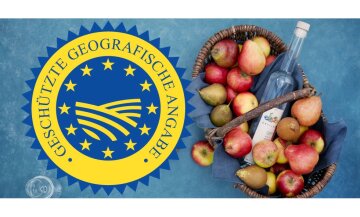
A Protected Geographical Indication (PGI) is granted to products whose quality, reputation or other distinctive characteristic is essentially attributable to their geographical origin.
In this case the region has demonstrably shaped the product, for example through history, trade routes, guild traditions or local know-how.
At least one defining stage of production, essential to the product’s quality or reputation, takes place in the region.
International examples: Südtiroler Speck (South Tyrolean Speck), Steirisches Kürbiskernöl (Styrian Pumpkin Seed Oil), Thym de Provence (Thyme of Provence)
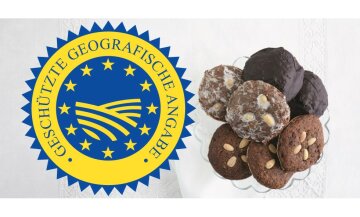
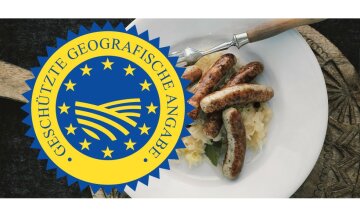
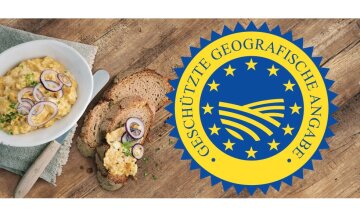
Examples from Bavaria: Bayerisches Bier (Bavarian Beer), Nürnberger Lebkuchen (Nuremberg Gingerbread), Schrobenhausener Spargel (Schrobenhausen Asparagus)
All EU-protected specialties worldwide are listed in the European Union Intellectual Property Network’s (EUIPO) GIview database, including key product information and official specifications.
System structure
EU protection of geographical indications, based on Regulation (EU) 2024/1143, forms part of the European quality policy and the EU Organic Regulation. The objective is to ensure origin-based quality, traditional know-how and transparent market conditions.
At its core, the system is a protection of names, comparable to a trademark. Applications are submitted by groups of traditional producers and assessed through a two-stage procedure at the national and EU level.
A core element of the procedure is the product specification. This sets out the link between the specific characteristics of the product and its geographical area of origin. It ensures the preservation of traditional quality standards, enables effective official controls and strengthens transparency and credibility for consumers.
In Bavaria, compliance with the product specification at the production stage is monitored by the Institut für Qualität in der Ernährungswirtschaft (Institute for Quality in the Food Industry) at the Bayerische Landesanstalt für Landwirtschaft (Bavarian State Research Center for Agriculture). Market controls are carried out by the official food control authorities, in particular the county food monitoring authorities, the Bayerische Kontrollbehörde für Lebensmittelsicherheit und Veterinärwesen (Bavarian Inspection Authority for Food Safety and Veterinary Affairs) and the Bayerisches Landesamt für Gesundheit und Lebensmittelsicherheit (Bavarian Health and Food Safety Authority).
Marketing activities of the Bavarian State Ministry for Food, Agriculture, Forestry and Tourism are implemented by alp Bayern – Agentur für Lebensmittel-Produkte aus Bayern (Agency for food products from Bavaria) in cooperation with the traditional producer groups.
These activities are conducted under the collective brand WeltGenussErbe, internationally presented as Bavarian Taste Heritage.
General support and information for producer groups and interested parties in Bavaria is provided by the Kompetenzzentrum für Ernährung (Competence Center for Nutrition) at the Bayerische Landesanstalt für Landwirtschaft (Bavarian State Research Center for Agriculture).